
What the sources agree on
The October guides describe acceleration-based movement: pressing a direction builds speed, and releasing it lets the character slow gradually. Chrisu connects dash displacement to that existing speed. A low-speed attempt can move very little even when the input is accepted.
The most clearly shared starting exercise is the left/right dodge. GAMES.GG lists Space with A or D. ItzVexo explains a side-direction change followed by Space while continuing forward. The videos do not justify the written guides’ universal “lateral only” rule: Shano Bangz and Chrisu also describe other direction changes.
Use the PC control reference for those differences. This exercise is for the documented PC movement; it does not invent touch or controller buttons.
Practice the movement sequence
Begin with room to move and a visible route to recover. Shano Bangz’s drill sequence at 0:27–1:08 starts with sharp left/right changes, then repeats left and right dodges while moving.
- Establish movement. Hold the movement direction until the character is travelling, rather than tapping Space immediately from a stop. Notice the difference between starting and moving at speed.
- Change to one side and dash. Apply the side input with Space using the documented lateral exercise. Watch for a displacement to that side, not just an animation.
- Recover the crossing direction. Continue toward your destination after the dodge. Repeat on the other side so you are not restricted to one habitual exit.
- Compare release with Alt. Releasing movement produces deceleration; Alt is the documented instant stop. After an Alt stop, start moving again and notice that speed must rebuild.
- Use the exercise in a pursuit. Choose the side that creates space from the approaching Chaser, then recover the route to the opposite boundary.
A successful drill leaves you able to choose the next direction while making progress. It does not require a particular block count or winning a whole match. The sources do not establish a measured universal dash distance.
Recognize and correct a failed attempt
Swipe or scroll this table on a narrow screen.
| What you notice | Relevant explanation | Next attempt |
|---|---|---|
| Very little displacement | Chrisu links low speed to a weak travelling dash | Build movement before applying the same direction-and-Space exercise. |
| You dodge into the pursuer | Direction created contact rather than separation | Choose an exit away from that Chaser before committing. |
| You continue drifting after releasing movement | Normal momentum is gradual deceleration | Compare an Alt stop, then rebuild movement. |
| You get across the pursuer but lose the route | The evasion and crossing are separate decisions | Recover toward the boundary rather than repeating the same dodge automatically. |
Chrisu describes a brief protection window during a dash, but that spoken claim is not an authoritative timing specification. Do not use an assumed one-second invulnerability timer as your success check. A downed or converted state is the actual outcome that matters in the match.
Use different decisions for the two roles
For a Runner, a dodge should create distance and preserve an exit. For a Chaser, waiting to read the Runner’s change can be more useful than committing first. The same input can therefore have opposite tactical purposes.
Rocket Shoes is an ability with a documented standstill burst. It is not proof that the ordinary momentum dash works identically; compare it in the ability reference.
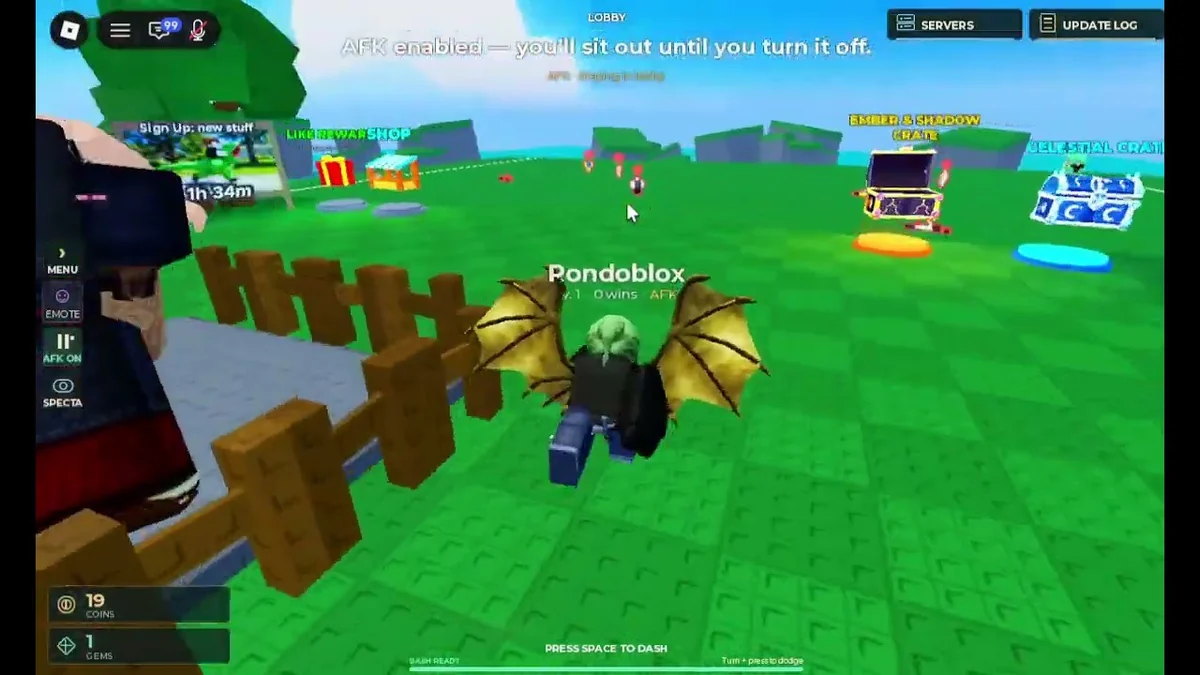 Open source
VendoPlus’ original dash-tutorial preview, dated 3 October. This static frame identifies the recording; it does not show the full input sequence.
Sources and dates
Source records checked 12 Oct 2026. Recording dates describe those recordings; they are not a new game update or a claim of firsthand testing.
- GAMES.GG beginner guideLarc · 2026-10-06 · Early October match, movement, currency, Hero/Chicken and ability descriptions.
- HUSS VALLEY PRO GUIDE!Chrisu · 2026-10-07 · Publisher metadata and recording; ASR is not a precision specification.
- HOW TO WIN EVERY MATCH IN HUSS VALLEY ROBLOX! (Tips and Tricks)Shano Bangz · 2026-10-03 · Publisher metadata and recording; ASR is not a precision specification.
- HUSS VALLEY GUIDE! (Pro Tips & Tricks) ROBLOXItzVexo · 2026-10-02 · Publisher metadata and recording; ASR is not a precision specification.
- How to Dash in Huss Valley RobloxVendoPlus · 2026-10-03 · Publisher metadata and recording; ASR is not a precision specification.